
Dear Friends and Colleagues,
Once again, we are managing the fallout from renewed instability in the Middle East. The current Iran–Israel–US conflict brings back vivid memories of my own time in the region — and perhaps this is an appropriate moment to share that story. In 1974, as a young employee at the Pan American World Airways GSA office in Bombay, I earned a modest monthly salary of 760 Indian Rupees (approximately CAD $105 at the time). Determined to pursue broader opportunities, I learned that a respected member of our Zoroastrian/Parsi community (Google can help you learn about us) was facilitating immigration for young professionals to Iran. We were also aware that Mohammad Reza Pahlavi, the ruling Shah of Iran was supportive of Zoroastrians relocating to Iran and had encouraged employment opportunities for the community across both public and private sectors. With a referral letter and 8,000 Iranian Riyals (approximately CAD $112.65 at the time), I landed in Tehran on July 9, 1975. During the 70s, Iran had emerged as a dominant force within OPEC, was extremely oil rich and from my vantage point, appeared prosperous and confident. The atmosphere suggested stability and growth, though history would soon reveal a very different trajectory.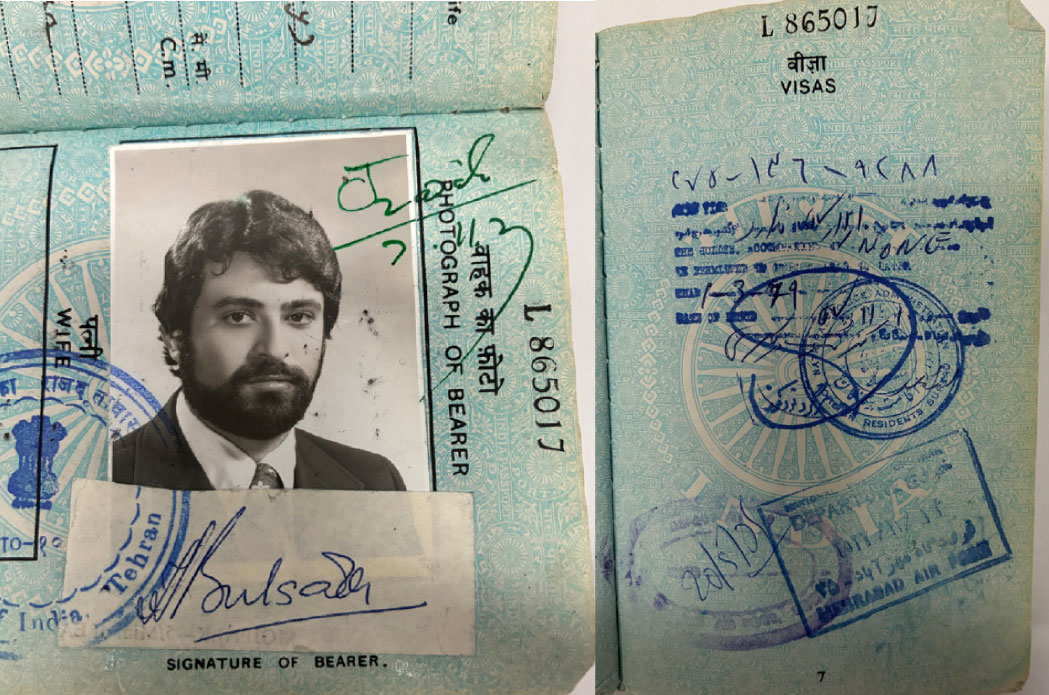
Within five days of arriving in Tehran, I joined Sadelmi S.P.A., an Italian engineering firm engaged in expanding Iran’s electrical power infrastructure. My initial responsibilities were logistical; securing clearance of heavy machinery shipments entering the country. My immediate supervisor, a retired senior customs official recruited for his expertise in government protocol, became both mentor and guide. He taught me Farsi and, more importantly, introduced me to the nuances of Iranian culture—particularly taarof, the intricate etiquette of courtesy and negotiation. Under his mentorship, I was promoted to Manager within ten months and was also entrusted with coordinating all business and leisure travel for the company’s eighty-three expatriate employees and their families.
I settled into a modest one-room terrace apartment on Kuche Sanaee in central Tehran. The space doubled as living room, dining room, and bedroom, but its expansive terrace, four times the size of the interior, offered sweeping views of the city skyline framed by the Alborz Mountains. The 4-story building was owned by an Iranian Zoroastrian family who lived on the three lower floors. The landlord and his wife were gracious hosts; she frequently sent up home-cooked meals, while he spent evenings teaching me chess until I could hold my own. Their two daughters occupied separate floors—one married, the other single. It was quietly understood that I was being considered for the latter, though the match never materialized.
By mid-1976, I was fully immersed in Tehran’s Zoroastrian community. Life was demanding yet lively with extended lunches, big and small house parties, Hollywood and Bollywood film nights, and spontaneous weekend excursions to Esfahan, Yazd, Kerman, or Shiraz. Having purchased a Honda motorcycle, I often rode into the countryside, discovering a nation at once ancient and swiftly modernizing. The Iranian people have left a lasting impression, and I always found their hospitality to be genuine, gracious, and deeply respectful. Invitations from strangers for tea or a home-cooked meal were common, and I accepted many. Without hesitation, I can say those years offered a remarkable quality of life.
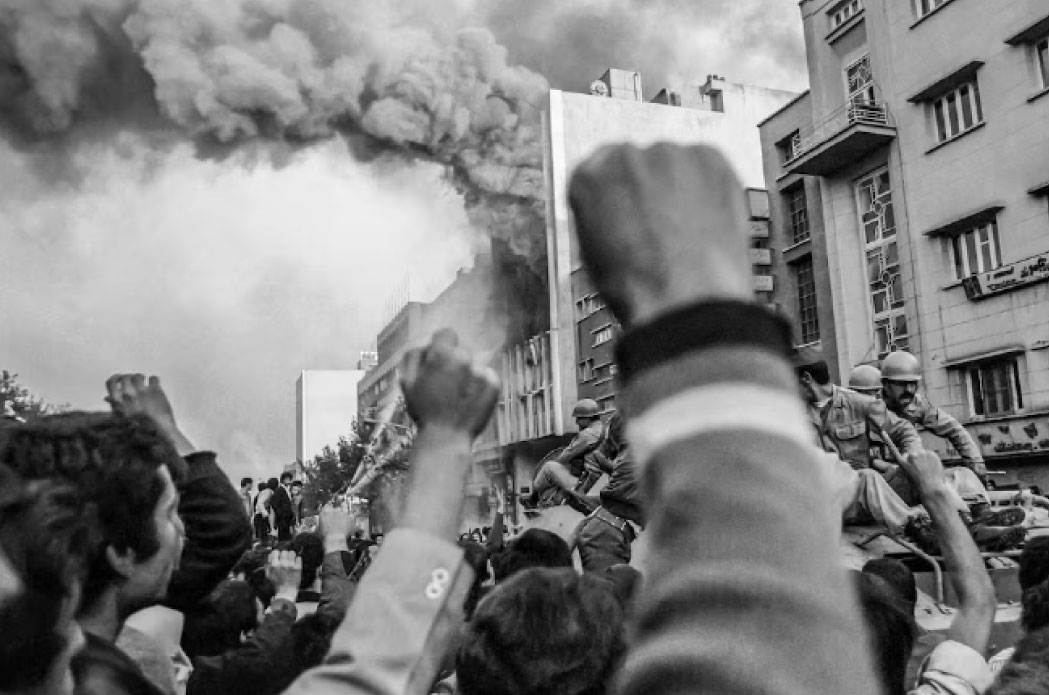
All that changed in 1978. The shortcomings of Mohammad Reza Pahlavi’s rule escalated into nationwide unrest and opposition movements began to form across the political spectrum. Protests became frequent and volatile, and the immigrant diaspora, often reluctantly, found itself swept into the upheaval. November 5, 1978, remains etched in my memory. Armed revolutionaries stormed our terrace to install massive speakers, broadcasting messages smuggled from opposition leaders in exile. Across Tehran, deadly protests raged. That evening, while walking home with groceries, we got caught in crossfire between revolutionaries and government troops. Dropping our bags, we lay flat in the street until the gunfire ceased. On another occasion, I was trapped in a traffic jam on a city flyover when gunfire erupted from below. Those of us on two-wheelers abandoned our machines and scrambled for cover. Recovering my motorcycle the following week was another story altogether.
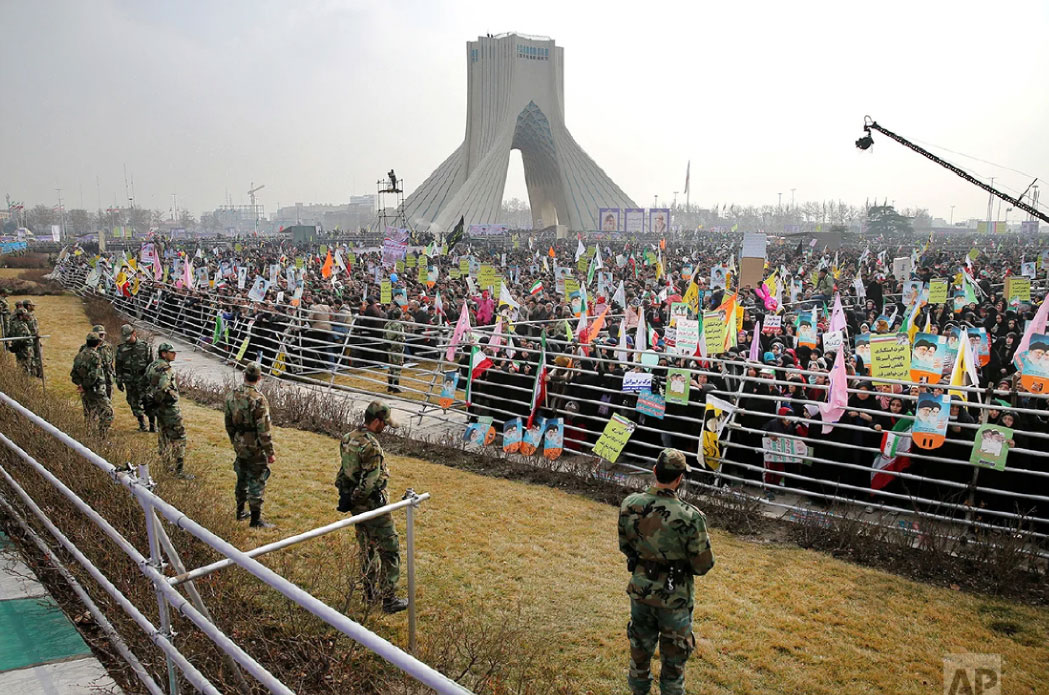
From that day forward, early-morning and late-evening knocks became routine. Revolutionaries and soldiers alike transported us to Shahyad Square to demonstrate—sometimes in support of the regime, other times against it. In those surreal days, survival meant adapting quickly, even learning which slogans to shout, depending on which side had taken you there. One’s life changed almost daily due to the volatility around us.
By late 1978, we had adopted a form of communal living. Our close circle of 27 friends and relatives rotated between homes, spending three to four days in one house before moving on to the next. When it was my turn to host, sleeping bags covered the terrace. The atmosphere was tense and
uncertain, yet remarkably joyous as companionship became our refuge. Each day followed a relentless pattern of protests, violent crackdowns, and renewed demonstrations. By year-end, the country began to shut down. Many were scrambling to leave, though my office was reluctant to release me.
On January 16, 1979, a tearful Mohammad Reza Pahlavi departed Iran for exile in Egypt, never to return. Two weeks later, on February 1, Ruhollah Khomeini returned from 15 years of exile in Iraq and France to a grand welcome. Standing in the streets of Tehran, I witnessed history unfold; one era ending as another began. I had watched firsthand the departure of a monarch and the arrival of a revolutionary cleric.
It was not until the end of February that I received clearance to leave. By then, the exodus was in full force. I was to fly home to Bombay on March 1. At Mehrabad Airport, there were no functioning air traffic control personnel, only confusion, urgency, and a collective determination to leave. We found out that, in the absence of traffic control, flights would operate with pilots communicating directly with one another to navigate Iranian airspace. It was extremely stressful and yet driven by relief that I lived through the entire adventure….. and survived!
0 Comments